A visit to Kanda Shrine 👹🍣🎎 Wonderful Japan
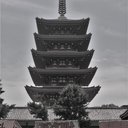

Unfortunately, my big trips are already quite a while behind me, and in recent years I have mostly hung around places that were already quite familiar to me. I don't want to go into the reasons for that at this point, because there are actually quite a few. What I wanted to say is that even in places you have visited many times before, you can always discover something new.
That's exactly how I feel about Tokyo, the capital of Japan, which I would probably put at the top of my list of favorite cities. And anyone who has ever been to Tokyo knows that this city is more than just a metropolis with millions of inhabitants—it's a great experience every time you visit.
Between centuries-old tradition and futuristic technology, tranquil temples and vibrant neighborhoods, you can discover a fascinating world that is second to none. I fell in love with Tokyo years ago, and even though I have wandered the streets of my favorite city many times, there is still a lot for me to discover there.
I love the mix of tradition and modernity, although I am more attracted to the old than the new. But since the two always and everywhere come together in symbiosis, visitors here should never get bored.
And that's why we're taking a little tour of Japan's capital again today. More specifically, we're heading to Kanda Shrine, which I came across half by chance and half planned during one of my last visits. So sit back, relax, and follow me...

We are now standing in front of the large torii, the main gate to Kanda Shrine, also known as Kanda-Myōjin. It is located in central Tokyo, very close to the famous electronics district of Akihabara. The history of this Shinto shrine dates back to the 8th century. It was originally built around 730 in the Ōtemachi area and has stood at its current location since the early 17th century, after the Tokugawa shogunate established Edo as the new capital.
Tokugawa Ieyasu promoted the shrine and strengthened its role as a protective sanctuary. Over the course of history, the shrine was destroyed and rebuilt several times, including after the Great Kantō earthquake of 1923. In the 20th century, it underwent repeated restoration, with modern materials being used in some cases to preserve the traditional architectural style.

Here we see the Zuishin-mon (随神門), a two-story, magnificently lacquered gate that marks the threshold between the profane urban space and the sacred area of the shrine. The bold colors, statuettes, and Shinto symbols on the gate quickly put visitors in the right frame of mind for this spiritual place and act as a magical point of attraction.

As with many other shrines and temples, the Zuishin-mon gate is striking with its vibrant vermilion color, which can be seen shining from afar. The gate has a distinctive curved roof with green tiles and a wide balcony with a large balustrade. Above the passageway hangs a central plaque with the name of the shrine inscribed on it, flanked by lanterns and decorative carvings.

Directly behind the gate is a central square, at the end of which stands the main building itself, constructed in the gongen-zukuri style. This building too is painted red and is richly decorated with gold and lacquer, further emphasizing its importance as one of Tokyo's most important shrines.
Among the kami worshipped at Kanda Shrine are Daikokuten and Ebisu, two of the Seven Gods of Fortune, who are particularly invoked by businesspeople for prosperity and success. Another kami worshipped at Kanda Shrine is Taira no Masakado, a historical warrior and regional lord from the Heian period over 1,000 years ago. His deification led to a partly very local cult and an ambivalent mix of rebel myth and protective divinity.

Here we see a stone komainu, also known as “shishi,” in the foreground. These mythical lion dogs serve as imposing guardian figures at many shrines and temples. The statues are traditionally placed in pairs at the entrance, where they are supposed to ward off evil spirits and unwanted visitors. We came with good intentions and were therefore allowed to pass and look around.

The Kanda Shrine was well visited on this sunny spring day. Fortunately the effects of “over-tourism,” which is currently also a problem in Japan, had not yet become apparent. The island nation in the Far East has turned into a very popular travel destination, particularly due to its very weak currency, which is of course also noticeable in the capital.
One big event take takes place here during the month of May is the Kanda Matsuri, one of Tokyo's three major festivals. This festival is closely associated with the shrine and takes place in its grand form in all odd-numbered years. It is famous for its magnificently decorated mikoshi parades, which wind their way through the surrounding neighborhoods and attract large crowds. In addition, the shrine also serves as a venue for traditional ceremonies such as Shichi-go-san and even for weddings. Furthermore they have come up with popular cultural ideas, such as special omamori (protective amulets) for electronics or collaborations with anime projects, which has made the visitor structure at Kanda Shrine very diverse.

We settled for a short tour of the shrine grounds, and as usual I had to take a whole bunch of photos. But at least that gave me some pictures for this blog post, which also helped me refresh my own memories a little.
A tour of Tokyo is always exciting and eventful, and if you keep your eyes open, it shouldn't be difficult to walk through the streets of this fascinating city in awe and wonder. Tokyo is always worth a visit and still offers me a lot of adventures.
Sometimes it's big, historic places like Kanda Shrine, and other times it's little hidden details that make me rave about the city. And when I look at the many pictures I took during my visits to the Japanese capital, I realize that I've already experienced quite a lot here. I'm already looking forward to my next visit, and I'm sure there will be something interesting to discover again....


You can check out this post and your own profile on the map. Be part of the Worldmappin Community and join our Discord Channel to get in touch with other travelers, ask questions or just be updated on our latest features.
Congratulations, your post has been added to the TravelFeed Map! 🎉🥳🌴
Did you know you have your own profile map?
And every post has their own map too!
Want to have your post on the map too?
- Go to TravelFeed Map
- Click the create pin button
- Drag the marker to where your post should be. Zoom in if needed or use the search bar (top right).
- Copy and paste the generated code in your post (any Hive frontend)
- Or login with Hive Keychain or Hivesigner and click "create post" to post to Hive directly from TravelFeed
- Congrats, your post is now on the map!
PS: You can import your previous Pinmapple posts to the TravelFeed map.Opt Out
I don't see anything wrong with returning to cities we've already visited, but it's an opportunity to explore those places within them that we couldn't before, so I'm glad you see the good side of the situation. Tokyo has incredible places, including this shrine with its imposing facade.
That is what I am talking about. familiar places have so many hidden mysteries which needs to be explored. And I am on it!
Wow some very interesting pictures my friend 🥰🤗
cheers
The colors, architecture and spiritual atmosphere show how Japan preserves its heritage while embracing the future. A beautiful reminder that even familiar places can stills surprise us with new discoveries.
that is right, and I am coming back there for sure
Kanda Shrine's vibrant vermilion gate and the rich decorations are truly striking 💖 It's smart how they adapt with anime and electronics amulets to stay current 🙌 Great to see you finding new adventures in your favorite city 💕
Congratulations @maxinpower! You received the biggest smile and some love from TravelFeed! Keep up the amazing blog. 😍 Your post was also chosen as top pick of the day and is now featured on the TravelFeed front page.
Thanks for using TravelFeed!
@for91days (TravelFeed team)
PS: Did you know that we have our own Hive frontend at TravelFeed.com? For your next travel post, log in to TravelFeed with Hive Keychain or Hivesigner and take advantage of our exclusive features for travel bloggers.