Heart Of Crete - A Trip To The Orthodox Places (2)

Translated from Lithuanian with Google.com
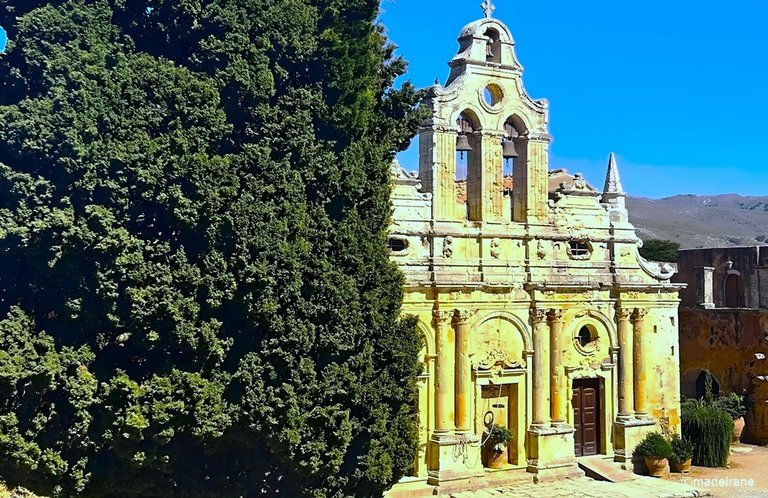
Nestled in the Cretan mountains, seemingly lonely at first glance, Arkadi Monastery is one of the most famous monasteries in Crete. According to one version, it was named after the monk who founded it. After a challenging route through the Patsos Gorge and a stroll through the village of Spili, we visited a couple more places and, at the end of the day, turned to Arkadi Monastery.
Įsikūręs Kretos kalnuose, iš pirmo žvilgsnio atrodantis vienišas, Arkadijaus vienuolynas yra vienas garsiausių Kretos vienuolynų. Pagal vieną versiją, jis buvo pavadintas jį įkūrusio vienuolio vardu. Po sudėtingo maršruto per Patsos tarpeklį ir pasivaikščiojimo po Spili kaimą aplankėme dar porą vietų ir dienos pabaigoje pasukome į Arkadijaus vienuolyną.>

The monastery's history dates back to Byzantine times. It is known not only in Greece but throughout the world as a symbol of self-sacrifice, freedom, and heroism in the face of the Turkish occupation. The monastery played an important role in the cultural life of Crete: a school and a well-stocked library were founded here. The monks were engaged in copying manuscripts. They lived peacefully and quietly, and locals came to study.
Vienuolyno istorija siekia Bizantijos laikus. Jis žinomas ne tik Graikijoje, bet ir visame pasaulyje kaip pasiaukojimo, laisvės ir didvyriškumo prieš turkų okupaciją simbolis. Vienuolynas atliko svarbų vaidmenį Kretos kultūriniame gyvenime: čia buvo įkurta mokykla ir gerai aprūpinta biblioteka. Vienuoliai vertėsi rankraščių perrašymu. Jie gyveno ramiai ir tyliai, o vietiniai gyventojai atvykdavo mokytis.>

The events that took place at the monastery are often referred to as the Cretan Holocaust and are believed to have changed the fate of Crete. During the Turkish occupation, Arkadi Monastery served as a refuge for rebels in Crete. The monks supported them with food and weapons. Most of the women and children hid here and, together with the monks, resisted attacks.
Vienuolyne vykę įvykiai dažnai vadinami Kretos holokaustu ir manoma, kad jie pakeitė Kretos likimą. Turkijos okupacijos metu Arkadijaus vienuolynas tarnavo kaip prieglobstis Kretos sukilėliams. Vienuoliai juos rėmė maistu ir ginklais. Dauguma moterų ir vaikų slėpėsi čia ir kartu su vienuoliais priešinosi išpuoliams.>
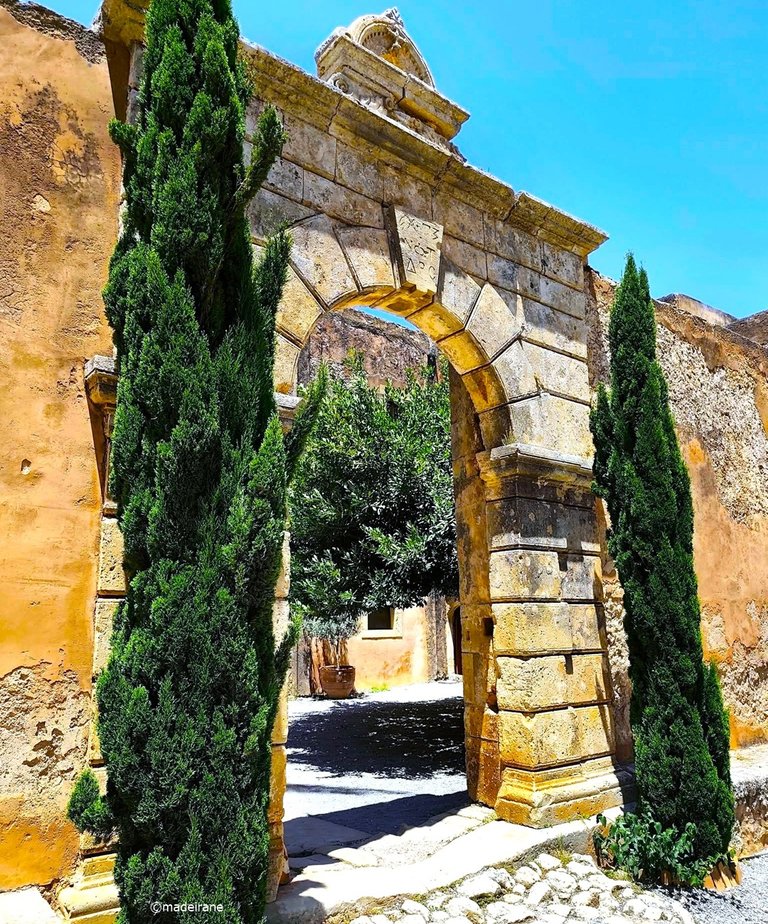
Stepping through the gates, the two-nave church with its Venetian decorative façade and graceful bell tower catches your eye. Despite the fire and destruction, its beautiful golden stone façade survived. You want to touch it. Inside, there's a carved cypress wood altar screen, and on the right side, a large icon of Christ in a gilded frame, part of the Resurrection scene from the church's original altar screen.
Žengiant pro vartus, akį patraukia dvinavė bažnyčia su venecijietišku dekoratyviniu fasadu ir grakščia varpine. Nepaisant gaisro ir sunaikinimo, jos gražus auksinio akmens fasadas išliko. Tiesiog norisi jį paliesti. Viduje yra raižyto kipariso medžio altoriaus uždanga, o dešinėje pusėje – didelė Kristaus ikona paauksuotame rėme – Prisikėlimo scenos dalis iš originalios bažnyčios altoriaus uždangos.>

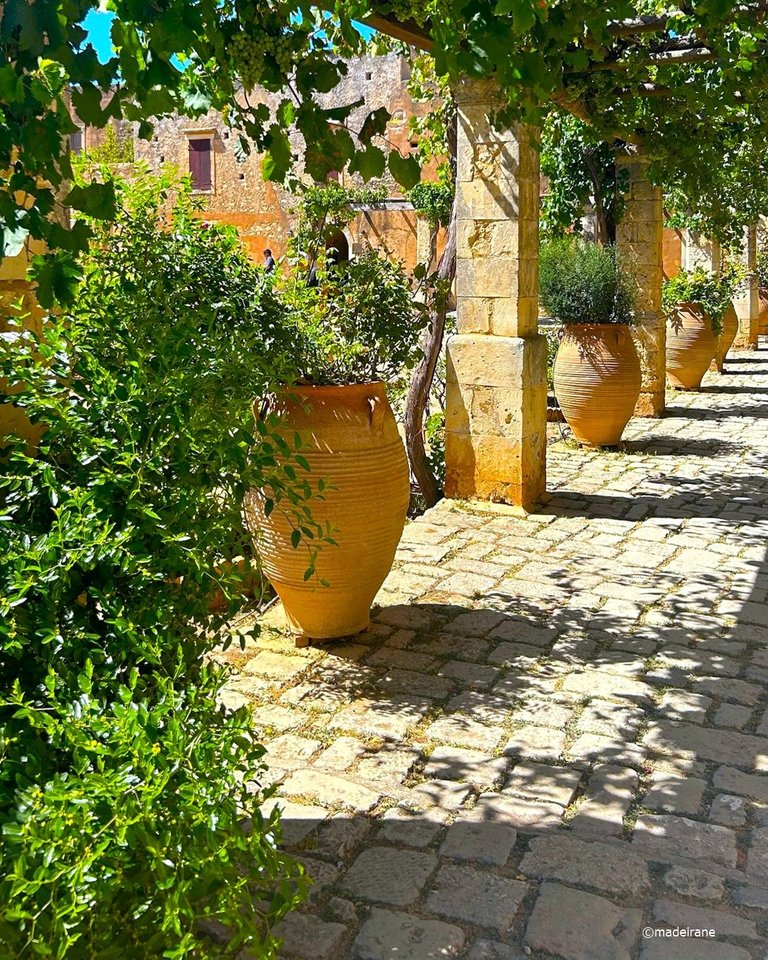

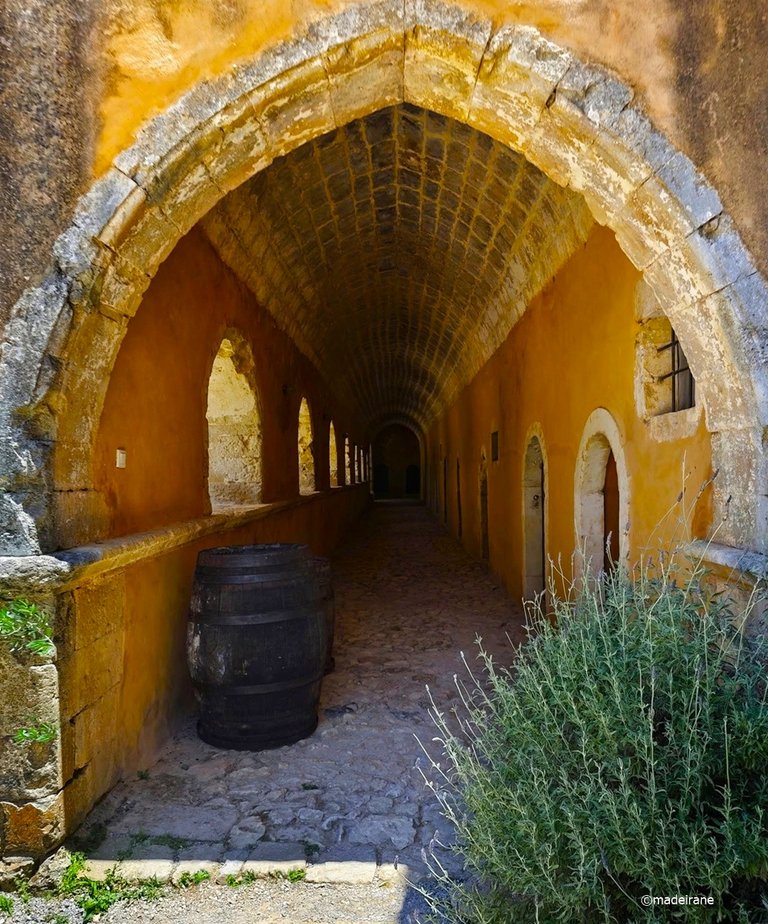
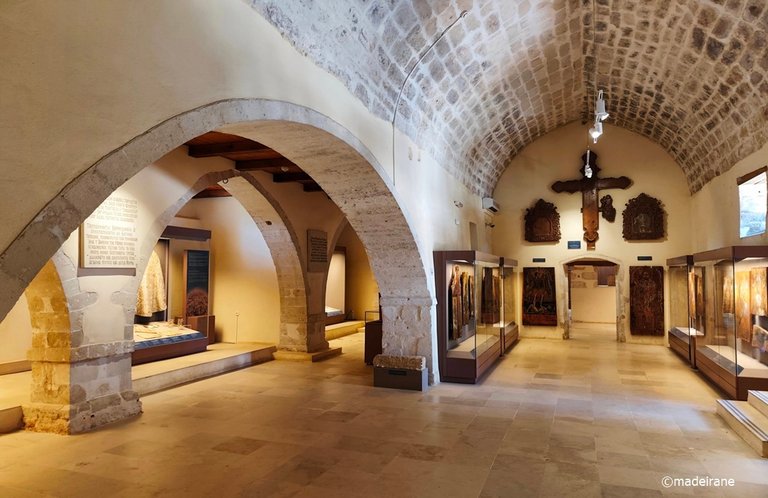
The Monastery of Saint Kalyviani boasts large, well-maintained grounds and a comfortable atmosphere. This monastery, also known as the Monastery of Our Lady of Kalyviani, is located approximately 60 km from Heraklion and is visited by both pilgrims and tourists, as it is located on the popular excursion route to Matala Beach. Most excursions make a stop here. The grounds are very large and well-maintained, encompassing a complex of buildings with a museum and shop, and five churches. The central church is bright and festive.
Šv. Kalyviani vienuolynas gali pasigirti didele, gerai prižiūrima teritorija ir jaukia atmosfera. Šis vienuolynas, dar žinomas kaip Kalyviani Dievo Motinos vienuolynas, yra maždaug už 60 km nuo Herakliono ir yra lankomas tiek piligrimų, tiek turistų, nes yra populiariame ekskursijų maršrute į Matalos paplūdimį. Dauguma ekskursijų čia sustoja. Teritorija yra labai didelė ir gerai prižiūrima, apimanti pastatų kompleksą su muziejumi ir parduotuve bei penkias bažnyčias. Centrinė bažnyčia yra šviesi ir šventiška.>


Originally, the monastery was for men. During Turkish rule, most of the buildings were destroyed; only a small 14th-century church survived. Since the 19th century, the iconostasis has been replenished, the buildings restored, and the monastery has become a place of pilgrimage. It's now a convent, but the presence of over 50 nuns isn't immediately noticeable. The large grounds are very comfortable to stroll through, with plenty of greenery and flowers. The monastery complex even includes a small pavilion with birds and animals, which fits in quite seamlessly.
Iš pradžių vienuolynas buvo skirtas vyrams. Turkijos valdymo laikais dauguma pastatų buvo sugriauti; išliko nedidelė XIV a. bažnyčia. Nuo XIX a. ikonostasas buvo papildytas, pastatai restauruoti, o vienuolynas tapo piligrimystės vieta. Dabar tai vienuolynas, tačiau daugiau nei 50 vienuolių buvimas nėra iš karto pastebimas. Didelė teritorija yra labai patogi pasivaikščioti, joje gausu žalumos ir gėlių. Vienuolyno komplekse netgi yra nedidelis paviljonas su paukščiais ir gyvūnais, kuris gana sklandžiai dera prie aplinkos.>

In fact, it's not immediately obvious you're in a monastery until you walk along the beautiful avenue to the church. The monastery also houses various shelters, institutions, and philanthropic foundations. It's very peaceful. The relics of holy martyrs are kept and periodically displayed for veneration.
Tiesą sakant, ne iš karto akivaizdu, kad esate vienuolyne, kol nepaeisite gražia alėja link bažnyčios. Vienuolyne taip pat yra įvairių prieglaudų, įstaigų ir filantropinių fondų. Čia labai ramu. Šventųjų kankinių relikvijos saugomos ir periodiškai eksponuojamos pagerbimui.>
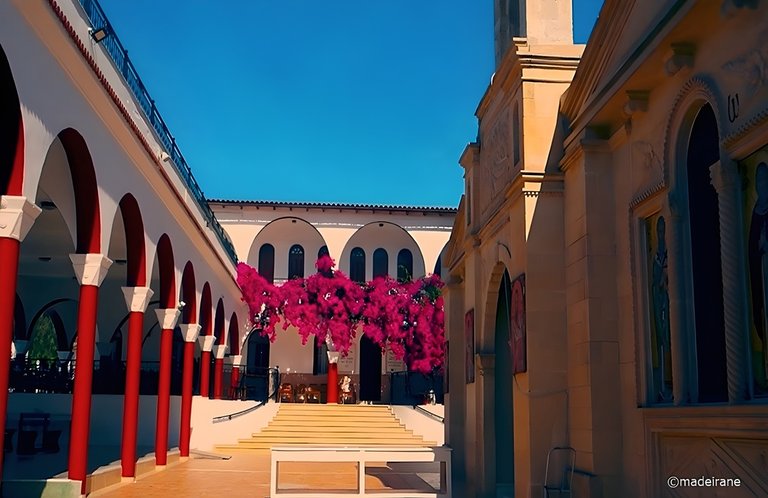
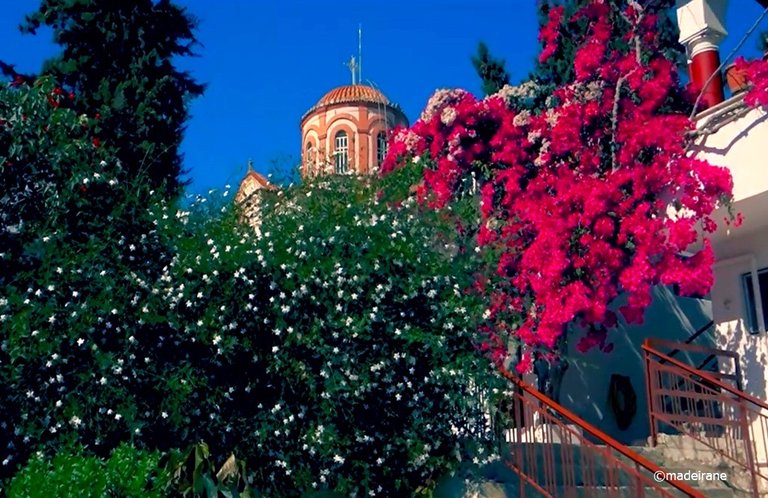
One more monastery - the Pagliani Convent. We arrived here in a rental car, and there's a huge parking lot. And what a view! The monastery is located on a hill, so we walked uphill from the parking lot. Entrance to the grounds is free. Since we didn't have a guided tour, we were captivated by the beauty and climbed the steep steps to the monastery cemetery! Then, we finally entered the monastery's central gate.
Dar vienas vienuolynas – Pagliani vienuolynas. Atvykome čia išsinuomotu automobiliu, laimei, yra didžiulė automobilių stovėjimo aikštelė. Ir koks vaizdas! Vienuolynas įsikūręs ant kalvos, tad nuo aikštelės užlipome į kalną. Įėjimas į teritoriją nemokamas. Kadangi neturėjome ekskursijos su gidu, mus sužavėjo grožis ir užlipome stačiais laiptais į vienuolyno kapines! Tada pagaliau įėjome pro centrinius vienuolyno vartus.>


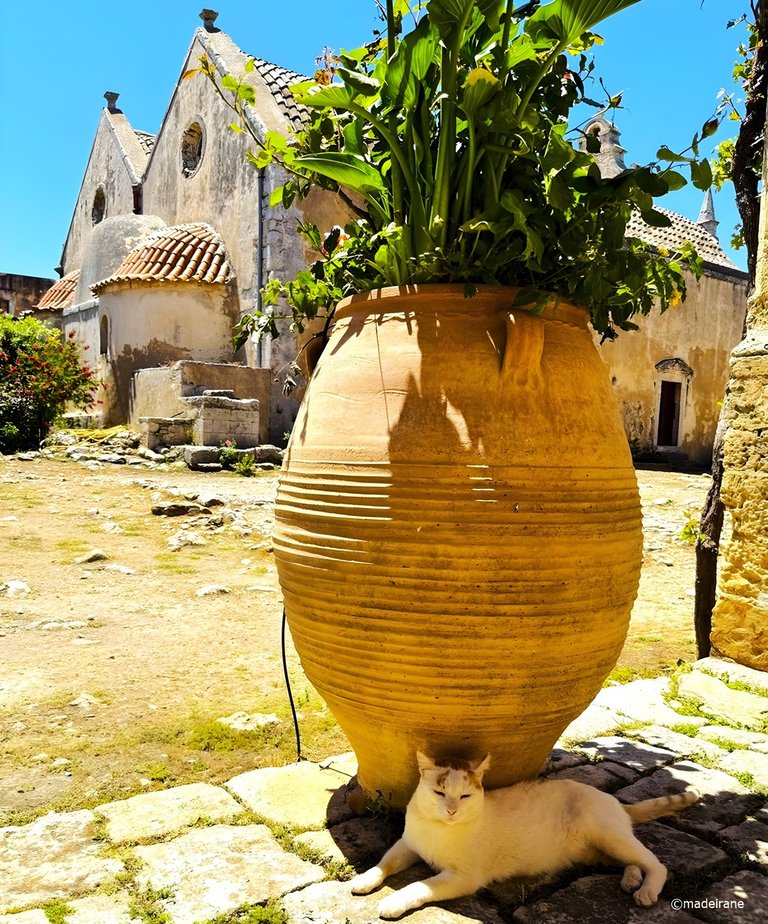
The Paliani Convent is one of the oldest operating convents in Crete. It's a perfectly traditional Cretan village with cobbled streets, decorative flowerpots, benches, a lot of greenery, and a flock of contented, well-fed cats. There are plenty of them on Crete, actually.
Paliani vienuolynas yra vienas seniausių veikiančių vienuolynų Kretoje. Tai visiškai tradicinis Kretos kaimas su grįstomis gatvelėmis, dekoratyviniais gėlių vazonais, suoliukais, didžiuliu žalumos kiekiu ir pulku patenkintų bei sočiai maitinamų kačių. Jų Kretoje iš tikrųjų gausu.>


The main attraction is a centuries-old myrtle tree. According to legend, an icon of the Mother of God was discovered in its branches. Small children can still see her face in the crown. Many tie crosses, ribbons, and notes to the branches. Along the way, we stopped at the church shop. It turned out to be one of the nun's cells, no different from a simple old village grandmother's hut. The only thing missing was a stove!
Pagrindinis traukos objektas – šimtmečių senumo mirtų medis. Pasak legendos, jo šakose buvo aptikta Dievo Motinos ikona. Maži vaikai vis dar gali matyti jos veidą karūnoje. Daugelis prie šakų pririšo kryžius, juosteles ir raštelius. Pakeliui sustojome prie bažnyčios parduotuvės. Paaiškėjo, kad tai buvo viena iš vienuolės celių, niekuo nesiskirianti nuo paprastos senos kaimo močiutės trobelės. Trūko tik krosnies!>

Crete is so historically fascinating that we wanted to see as much as possible. And the monasteries on Crete are varied - some are Byzantine-style, while others are truly Greek, truly Cretan. While travelling through sacred places, we were all surrounded by peace and silence. The hustle and bustle of the world receded into the distance, and it seemed that our busy everyday life was just a mirage, and real life, full of hidden meaning, was right here.
Kreta yra tokia istoriškai žavi, kad norėjome pamatyti kuo daugiau. O Kretos vienuolynai yra įvairūs – vieni yra bizantiško stiliaus, kiti – tikrai graikiški, tikrai kretietiški. Keliaujant po šventas vietas, mus visus supo ramybė ir tyla. Pasaulio šurmulys nutolo tolyn, ir atrodė, kad mūsų įtempta kasdienybė tėra miražas, o tikras gyvenimas, kupinas paslėptos prasmės, yra čia pat.>

[//]:# (!worldmappin 35.30994 lat 24.62903 long Heart Of Crete - A Trip To The Orthodox Places (2) d3scr)
💝💝💝💝💝💝💝💝💝💝
With love, @madeirane
Photos are taken by me.
© 2026
You can check out this post and your own profile on the map. Be part of the Worldmappin Community and join our Discord Channel to get in touch with other travelers, ask questions or just be updated on our latest features.
That was a very nice monastery, one of a kind. It has a different beauty and its a good place to visit and make some meditations.