Visiting the Ramos Sucre birthplace, an outstanding construction of colonial architecture (Eng - Esp)


Hello fellow travelers from around the world! It's a pleasure to greet you and wish you an excellent and blessed day. Today marks the 510th anniversary of the city of Cumaná, known as the firstborn of the American continent. On this important date, I invite you to join me on a tour of the Ramos Sucre House Museum, the home of a distinguished poet, lawyer, and polyglot writer, a descendant of the Grand Marshal of Ayacucho, Antonio José de Sucre. According to the genealogical line, the Marshal was the great-uncle of this illustrious poet from Cumaná. The house is located on Sucre Street, diagonally across from the Santa Inés Church and in front of the Culture Department. Its architecture corresponds to the classic colonial style typical of the period; an entrance hall or vestibule leads to the main living room, the garden to the right, the bedrooms, offices, dining room, and kitchen in the next hallway, and at the end, the patio or corridor, additional rooms, and bathrooms. The fence is a high wall that separates the property from neighboring houses and provides privacy for the families.
At the front, there is a sign identifying the poet's birthplace with his name. There is also a plaque with his birth date, death certificate, and tributes from various government institutions, the Central University of Venezuela (UCV), where he pursued his higher education, and the University of the East (UDO), which manages the house museum. The windows, the wooden door, and an area of the library are visible at the front. From the main entrance, a long hallway leads to a small room with wooden furniture, where a portrait of the poet is located. The garden, with its many plants and palm trees, can be seen. This space was used in homes to cultivate food. Andrés Eloy Blanco's birthplace also has a small garden or central patio where the family used to grow vegetables. In some cases, this land served as a resting place for horses and provided them with fodder.
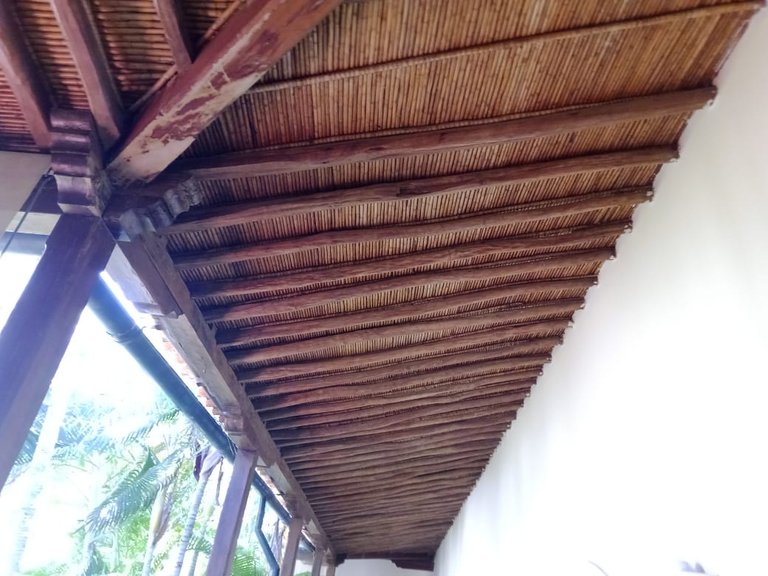
Moving along the hallway, we observed the floor with striking figures. This floor is not original and was replaced with tile, to which figures such as castles, crowns, shields, swords, and horses were added, which appear to be chess pieces or pieces from some board game. The entrance floor is preserved in its original state, as is the library floor. The roof is made of wild cane, the same material used in Andrés Eloy's house. To preserve this material, it is periodically maintained, thus preventing termites from invading and breaking
the roof structure.
To one side of the library, there is a beautiful painting with a mountain in the background, a pink tree, a green tree, and a bush in the center. Below, there are several bushes with flowers of various colors. The painting is large and very beautiful. Next to the painting is a beautiful chair with a striking design. In the painting, you can also see several branches on the trees, butterflies, and flowers that adorn the landscape. Then we have a view of the library from the outside. You can see the floor, which retains its original design, with the same characteristics as the floor of the entrance hall.
Hola amigos viajeros en todo el mundo es un placer saludarles deseando que tengan un excelente y bendecido día, hoy se celebra el cumpleaños 510 de la ciudad de Cumaná conocida como la primogénita del continente americano, en el marco de tan importante fecha les invito me acompañen en un recorrido por la casa museo Ramos Sucre, un destacado poeta, abogado, escritor políglota, descendiente del Gran Mariscal de Ayacucho, Antonio José de Sucre, de acuerdo a la línea genealógica el Mariscal era tío abuelo de este insigne poeta cumanés, la mencionada casa se ubica en la calle Sucre, diagonal a la iglesia Santa Inés y al frente del Gabinete de Cultura, arquitectura corresponde al estilo colonial clásico y propio de la época; un pasillo a la entrada o zaguán, sala principal, el jardín a mano derecha, en el siguiente pasillo las habitaciones, oficinas, comedor, cocina y en la parte final el patio o corredor, otras habitaciones y los baños, la cerca es una pared alta que separa los terrenos de las casas vecinas y brinda privacidad a las familias.
En la parte frontal hay un letrero que identifica la casa natal del poeta, con su respectivo nombre, hay también una ficha con su fecha de nacimiento, partida y el homenaje de varias instituciones gubernamentales, la Universidad Central de Venezuela (UCV), donde cursó sus estudios superiores y la universidad de oriente (UDO) quien se encarga de administrar la casa museo, en el frente se observan las ventanas, la puerta de madera y un área de la biblioteca, luego desde la la puerta principal un largo pasillo que conduce a una pequeña sala con muebles de madera, donde se ubica un cuadro del poeta, se aprecia el jardín con muchas plantas y palmeras, este espacio era usado en las casas para cultivar los productos de consumo, la casa natal de Andrés Eloy Blanco, también posee un pequeño huerto o patio central donde la familia solía cultivar hortalizas, en algunos casos este terreno era el lugar para que los caballos descansaran y tuviesen forraje para alimentarse.
Avanzando en el pasillo, observamos el piso con llamativas figuras, este no es original y fue reemplazado por caico, al cual agregaron figuras como; castillos, coronas escudos espadas y caballos, que parecen ser piezas de ajedrez o de algún juego de mesa, el piso de la entrada si se conserva en su estado original al igual que el de la biblioteca, el techo es de caña brava, el mismo material que se usó en la casa de Andrés Eloy, para conservar este material, se le hace su respectivo mantenimiento periódicamente, de esta forma se evita que las termitas invadan y rompan la estructura del techo.
A un lado de la biblioteca se observa un hermoso cuadro con una montaña al fondo, un árbol color rosa otro verde y un arbusto en el centro, en la parte de abajo varios arbustos con flores de variados colores, el cuadro es grande y muy bonito, al lado del cuadro hay una hermosa silla con un llamativo diseño, en el cuadro se aprecian también varias ramas en los árboles, mariposas y flores que adornan el paisaje, luego tenemos una vista de la biblioteca desde la parte de afuera, se observa el piso que conserva su diseño original, con las mismas características del piso del zaguán.


In the hallway we observe the crescent-shaped lamps, the information board, the painting I mentioned earlier, the white, high-relief door frames, also two circular tables with a beautiful column design on the base and legs, then we have a view of the ceiling with the wooden columns that support the bamboo, then the water tank, the garden and a panoramic view of the different columns located next to the garden.
Then, at the front of one of the rooms, you can see two lamps, an information board, and the door. This door is made of wood, has two leaves, and is adorned with pictures on each leaf. In the hallway, very close to the door, is a beautiful and eye-catching library or book display area. It consists of two wooden bars with several glass compartments where the brochures are placed for display. The base is also square, and at the bottom, there is another smaller square that serves as a support. Both bars are made of wood. Next, we see the window with a design similar to the door, but with rectangles and squares. The frame is quite wide and white. In the following photograph, we have a complete view of the water tank, which has a beautiful design, an engraving on top that looks like a flower. Next to it is the kitchen door. You can see the roof and the columns that meet at the top to support its weight. At the back of the garden is a small auditorium where the University of Oriente, the educational institution that manages this space, holds its activities and meetings. The fans are located above the small auditorium of the University of Oriente.
En el pasillo observamos las lámparas que tienen forma de medialuna, la cartelera informativa, el cuadro que mencioné anteriormente, los marcos de las puertas de color blanco y en alto relieve, también dos mesas circulares con con un hermoso diseño de columna en la base y las patas, tenemos a continuación una vista del techo con las columnas de madera que soportan la caña brava, luego el tinajero, el jardín y una panorámica de las diferentes columnas que se ubican al lado del jardín.
Luego en el frente de una de las habitaciones, se observan dos lámparas, una cartelera informativa y la puerta, esta es de madera, tiene dos hojas y está adornada con cuadros en cada una de las hojas, en el pasillo muy cerca de la puerta se ubica una hermosa y llamativa biblioteca o zona de exhibición de libros, consiste en dos barras de madera que tienen varias divisiones de vidrio donde se colocan los folletos a exhibir, la base es también un cuadrado y en la parte inferior otro cuadrado más pequeño que le sirve de soporte, a ambas barras son de madera, seguidamente vemos la ventana con un diseño similar al de la puerta, pero tiene rectángulos y cuadrados, el marco es bastante amplio y de color blanco, en la siguiente fotografía tenemos una visión completa del tinajero, que tiene un hermoso diseño, un grabado en la parte de arriba que parece una flor, al lado está la puerta de la cocina, se aprecia el techo y las columnas que se unen arriba para soportar el peso del techo, en la parte trasera del jardín se ubica un pequeño auditorio donde la Universidad de Oriente, casa educativa que administra este espacio, realiza sus actividades y reuniones, en la parte superior se encuentran los ventiladores, encima del pequeño auditorio de la Universidad de Oriente.




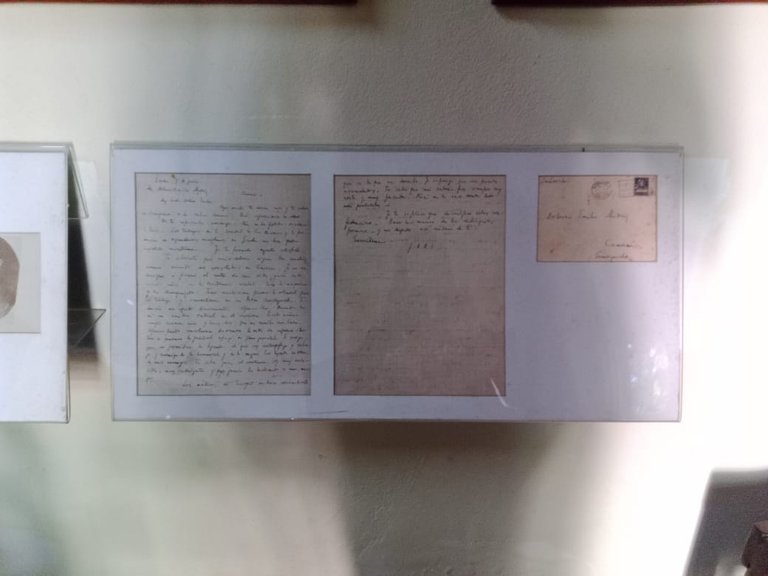
The birthplace of Ramos Sucre has been transformed into a museum where tourists and visitors can see some of the furniture used by his family. It also boasts one of the largest literary libraries in Venezuela, where book lovers can find the most important literary works from Venezuela and Latin America, from the colonial era to the present day.
Leaving the main room, we enter the dining room, which is notable for its large table with 14 chairs, six on the sides and one at each end, as well as three chairs against the wall. This was the place where the family gathered to share meals and pleasant conversations. In this room, several of the poet's degrees are also displayed: Bachelor's, Law, among others, as well as various awards. At the back of this room is a picture with the family tree of the poet Ramos Sucre, which includes a brother of the great Marshal, who was the father of the poet's mother (Antonio José de Sucre is his great-uncle).
The dining room also features a wooden display case, where period decorations such as lamps and vases are displayed. The window facing the hallway is a semicircular arch with wooden edges, and the door, like the window, is also made of wood. The roof throughout the house is made of cane, a material widely used at that time and very durable, provided it receives proper maintenance. Upon leaving the dining room, we find what would be the kitchen. It contains period utensils, and at its entrance, a wooden stand or base for placing the water jugs. The water jugs are large jars used to store water; they are made of clay and keep the water at a relatively cool temperature and with a pleasant taste.
La casa natal de Ramos Sucre se ha convertido en un museo donde los turistas y visitantes pueden conocer parte del mobiliario que utilizaba esta familia, cuenta además con una de las bibliotecas de literatura más grande de Venezuela, en ella los amantes de la lectura, pueden conseguir las más importante obras literarias de Venezuela y América Latina, desde la época colonial hasta la actualidad.
Saliendo de la habitación principal, entramos al comedor, este destaca por una gran mesa con 14 sillas, seis a los lados y una en cada extremo, también tres sillas en la pared, era el lugar donde la familia se reunía a compartir la comida y amenas conversaciones, en este salón también se observan varios de los títulos que obtuvo el poeta; bachiller, abogado, entre otros, así como varios reconocimientos, en la parte posterior de este salón se encuentra un cuadro con el árbol genealógico de la familia del poeta Ramos Sucre, en ella se ubica un hermano del gran Mariscal, que era el papá de la mamá del poeta, (Antonio José de Sucre es su tío- abuelo).
El comedor cuenta también con una vitrina de madera, donde se observan adornos de la época; como lámparas y jarrones, la ventana que da hacia el pasillo, tiene forma de arco de medio punto con los bordes de madera y la puerta al igual que la ventana es también de madera, el techo en toda la casa es de caña brava un material muy usado en esa época y de gran durabilidad, siempre y cuando se le haga el mantenimiento respectivo, al salir del comedor nos encontramos con lo que sería la cocina, en ella se encuentran los utensilios de la época y a la entrada de esta, un tinajero de madera o base para colocar las tinajas, las tinajas son unos jarrones grandes, donde se acostumbraba a guardar el agua, están hechos de barro y conservan el agua a una temperatura relativamente fría y con un sabor agradable.




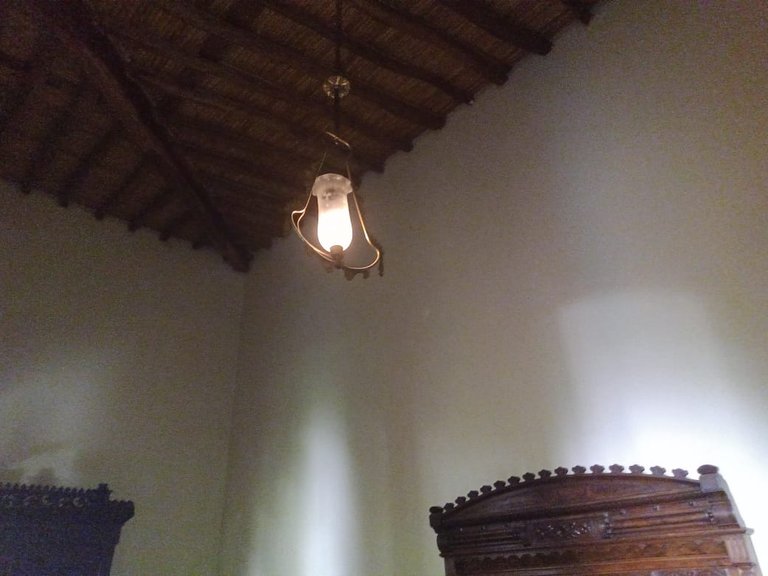
Among the rooms, his mother's stands out, featuring a wooden bed, a wardrobe or closet where clothes, cosmetics, and other items were typically stored, and a headboard that is notable for its height and decorations at the top. Also present is a dressing table with its drawers, a period lamp, and a ceiling lamp that belonged to the family. The poet lived part of his childhood in this house until approximately age seven, when he lost his parents and was sent to live with his aunts and uncles. He later returned to Cumaná and finished his studies at the Antonio José de Sucre High School, where he excelled academically and also became an assistant to the then-director, Silverio González.
Upon leaving the kitchen, there is a small staircase leading to the patio. According to the guide, this area was restored following the original design. The exterior rooms, roof, and columns were replaced, as they were in an advanced state of disrepair. The bathrooms were also repaired, and the gardens were cleaned and enlarged, featuring various plants. The patio itself has a small stage where the family used to gather with visitors for tea or family conversations.
On the wall, you can see cylindrical white lamps. What caught my attention most about this house was the flooring and the interior design. It's also quite long, stretching from Sucre Street to the sidewalk on Aristiguieta Avenue, which borders Guaiquerí Park. It was a lovely experience visiting this house; it was my first time there. I loved its history, the layout of the rooms, and the patio with its small garden. It's kept clean and tidy. This time, my little adventurer couldn't join me because of school, but I hope to take him in the next few days so he can also see the Ramos Sucre house and its charming style.
Walking down the right-hand hallway, where the bedrooms are located, we see a painting on the library wall and a beautiful black chair (similar to the one in the Andrés Eloy Blanco house). Further along the wide hallway that leads to the patio, we see more columns with a beautiful design. The top is T-shaped and decorated with a kind of flower or snail.
Entre las habitaciones destaca la de su mamá, con una cama en madera un escaparate o armario, donde se acostumbraba a guardar la ropa, cosméticos, entre otros y el espaldar de la cama que resalta por su altura y decoraciones en la parte superior, también la peinadora con sus respectivas gavetas, se observa la lámpara propia de la época y en el techo se aprecia una lámpara que perteneció a esta familia, el poeta vivió parte de su infancia en esta casa aproximadamente hasta los 7 años, cuando perdió a sus padres y fue enviado con sus tíos posteriormente regresa a Cumaná y termina sus estudios en el Liceo Antonio José de Sucre, donde se destacó por su rendimiento académico y también se convirtió en ayudante del entonces director, Silverio González.
Al salir de la cocina, hay una pequeña escalera que conduce al patio, de acuerdo a la información de la guía, esta zona fue restaurada siguiendo el diseño original, las habitaciones externas, el techo y las columnas, fueron reemplazadas, ya que estaban en un avanzado estado de deterioro, los baños también fueron reparados, los jardines se limpiaron y ampliarion, en ellos se observan algunas plantas, luego vemos el patio y este cuenta con un pequeño escenario, donde la familia solía reunirse con los visitantes para compartir la hora del té o tertulias familiares.
En la pared se observan lámparas de forma cilíndrica que son de color blanco, lo que más me llamó la atención de esta casa fue el piso y el diseño interior, además es larga, se extiende desde la calle Sucre y termina en la acera de la avenida Aristiguieta, esta avenida limita con el parque Guaiquerí, fue una linda experiencia conocer esta casa, es la primera vez que la visitó, me encantó su historia, distribución de las áreas y el patio con su pequeño jardín, la mantienen limpia y en orden, en esta ocasión mi pequeño aventurero no me pudo acompañar por sus actividades escolares, espero llevarlo en los próximos días para que también conozca la casa Ramos Sucre y su encantador estilo.
Recorriendo el pasillo derecho, donde están las habitaciones vemos un cuadro en la pared de la biblioteca, una hermosa silla de color negro (similar a la ubicada en la casa Andrés Eloy Blanco), luego en el amplio pasillo que se observa hasta el patio, vemos nuevamente otras columnas con un hermoso diseño en la parte superior tiene forma de T y está decorada con una especie de flor o caracol.





Blessings!

¡Bendiciones!

Translated with https://www.deepl.com/translator
          All images are my own.

   Todas las imágenes son de mi autoría.
You can check out this post and your own profile on the map. Be part of the Worldmappin Community and join our Discord Channel to get in touch with other travelers, ask questions or just be updated on our latest features.
Gracias @worldmappin 🌸
This post has been manually curated by @steemflow from Indiaunited community. Join us on our Discord Server.
Do you know that you can earn a passive income by delegating to @indiaunited. We share more than 100 % of the curation rewards with the delegators in the form of IUC tokens. HP delegators and IUC token holders also get upto 20% additional vote weight.
Here are some handy links for delegations: 100HP, 250HP, 500HP, 1000HP.
100% of the rewards from this comment goes to the curator for their manual curation efforts. Please encourage the curator @steemflow by upvoting this comment and support the community by voting the posts made by @indiaunited.
Thanks for the support @indiaunited and @steemflow
Cheers!
Very historic place! The house preserves it colonial charm and showcases the life and work of Andres Eloy Blanco. The library. Garden and architecture make it feel both inspiring and peaceful.
Hi @dreamrona, it's true, the house has a lovely charm. I like the hallways and the garden; the spaces are warm and inviting. 😊 🌺
Best regards!
Hiya, @lauramica here, just swinging by to let you know that this post made it into our Honorable Mentions in Travel Digest #2757.
Your post has been manually curated by the @worldmappin team. If you like what we're doing, please drop by to check out all the rest of today's great posts and consider supporting other authors like yourself and us so we can keep the project going!
Become part of our travel community:
Saludos @worldmappin y @lauramica, gracias por la mención y el apoyo.🤗🌸
se ve espectacular
Hola @dari-s, la casa tiene un lindo diseño y se conserva muy bien. 😊🌺
Greetings @qurator and @ewkaw, thank you for your support
Muchas gracias @hive-174680
I really like the red floor here, but it's also incredibly beautiful with the old-fashioned ceramic tiles. Is that what they call old is gold?
Greetings @isdarmady, the apartment is beautiful, and the overall design is lovely. Houses from this era are considered to be worth their weight in gold, due to their cultural richness, history, and enduring appeal.
Happy weekend!